- Designing Training Program For New Employees
- Designing Training Program
- Designing Training Program Ppt
What are the basic steps to effectively design a training program? Training has an important part in the modern organization. Companies spend substantial enormous sums in the training of their employees. Hence, it is of utmost essence to ensure that the training programs designed and conducted meet the training requirements of the organizations. All the training programs should be customized to meet the needs of individual and organizational needs. The process of designing an effective training program has the following stages: 1.
Definition of the training needs: In this phase, the needs of the organization are understood. These needs are not analyzed in isolation but in the context of the objectives of the organization. Goals are the long term objectives of the company such as reaching a position in the market, attaining a sales target. Needs are those factors which will enable the company to attain those goals, such as, training in hardware and software, negotiation skills etc. Definition of the target employees: The next phase of designing the training program involves identifying the employees or a section of the employees who need training.
8.4 Designing a Training Program. Be able to design a training program framework. And anyone involved in the training the timing and confirm that it fits. In addition, focus on the user when designing training manuals or online training. Use language that isn't corporate, include images and multimedia, and keep it interesting for the reader. Some call this On the Job Training (OJT) or side- by- side training. This strategy allows the new associate to see first hand the different facets of the position.
This is imperative, since, training resources are limited and training programs, in general, may be specific to employees who are at a specific capacity and position in the organization. The employees should also be involved in this process as this makes the training programs more meaningful and productive.
Development of the content: In the majority of cases, the content development can be done by in-house experts. The content is usually done on the basis of a manual or a process chart, which already exists. In the remaining situations, help from an external vendor is necessary. Examples of these can include training in rules and regulations, behavioral training, training in computer competency etc. The development of the content also includes allied steps such as optimization of the delivery methods, pacing of the training to prevent boredoms, developing notes, proper sequencing of the training modules, effective testing to measure training at the end of the program or periodically etc. Outlining the results expected from the training program: This step is extremely important as this gives an idea of the efficiency of the training program. This enables modification of the training programs in tune with the requirements.
Some examples of results expected are higher efficiency, improved safety levels, better sales results, a more productive workplace etc. At the end of the training program, feedback from the participants and tests should be conducted to gauge the success of the training program. Related Articles Related Discussion.
Designing Training Programs is important. The fourth chapter of Effective HR discusses the meaning and significance of training design.
In this chapter, Training design models and the factors involved for designing a training program is discussed. Understand the motivation dynamics of trainees and the process of training design from this presentation by Welingkar’s Distance Learning Division. For more such innovative content on management studies, join WeSchool PGDM-DLP Program: Join us on Facebook: Follow us on Twitter: Read our latest blog at: Subscribe to our Slideshare Channel: http://www.slideshare.net/welingkarDLP.

Designing Training Program For New Employees
Designing Training Programs. 1. Welingkar’s Distance Learning Division Effective HR CHAPTER-4 Designing Training Programs We Learn – A Continuous Learning Forum. Objectives. After completing this chapter, you should be able to: – Know the meaning and significance of training design. – Know the various training design models – Identify the factors to be taken into account for designing a training program.
– Understand the motivational dynamics of trainees. – Understand the process of training design. Meaning and significance of training design. After assessing training. Designing successful needs, the training training programs manager will come to requires not only a know whether training is thorough understanding the right solution to the of the training problem, performance or but also a well-stated compliance problem. Definition of the results to be achieved & a thought. If training is seen as out plan for achieving solution to the problem, those results.
Then the training process moves to the next stage designing a program. Meaning and significance of training design. Design is a planning activity which in the context of training, refers to – the framework for analyzing a training problem, defining the intended outcome, – determining how to present the content to learners to achieve those outcomes, – developing the training course according to the design, implementing the course, – evaluating its effectiveness and – devising follow-up activities. Meaning and significance of training design. Training designers will have to consider certain important factors from three perspectives before designing a program and the three perspectives are – cost, availability and appropriateness. Training designers will have to answer the following questions – What materials will be required to implement the program in a particular way? – What media will be used?
– What specialized expertise will be required for implementation of this design?. Meaning and significance of training design. The basic elements of an effective training design are: – It is learner-focused – It should be based on identified needs – It has measurable objectives – It is goal oriented – It is time bound – It has taken into account the resource constraints and availability. Meaning and significance of training design. Training design is nothing but a training plan and involves three activities — – Stating the training objectives – Identifying the learning activities as well as methodologies – Sequencing the activities in which they have to be held for meaningful learning. Training design models.
Designers of learning programs should first explore existing models before starting to design. Below are two training models that training managers use while designing training programs – Instruction system development model – Transitional model. We will discuss these in brief in the subsequent slides.
Training design models. Instruction system development model. Training design models. The Instructional System Development model comprises of five stages: – 1.
Analysis. This phase consist of training need assessment, job analysis, and target audience analysis. Planning. This phase consist of setting goal of the learning outcome, instructional objectives that measures behavior of a participant after the training, types of training material, media selection, methods of evaluating the trainee, trainer and the training program, strategies to impart knowledge i.e. Selection of content, sequencing of content, etc. Training design models.
The Instructional System Development model comprises of five stages: – 3. Development. This phase translates design decisions into training material.
It consists of developing course material for the trainer including handouts, workbooks, visual aids, demonstration props, etc. Course material for the trainee including handouts of summary. Execution. This phase focuses on logistical arrangements, such as arranging speakers, equipment benches, podium, food facilities, cooling, lighting, parking, and other training accessories. Training design models.
Designing Training Program
The Instructional System Development model comprises of five stages: – 5. Evaluation. The purpose of this phase is to make sure that the training program has achieved its aim in terms of subsequent work performance. This phase consists of identifying strengths and weaknesses and, making necessary amendments to any of the previous stage in order to remedy or improve failure practices. Training design models. Transitional model – Transitional model focuses on the organization as a whole.
– The outer loop describes the vision, mission and values of the organization on the basis of which training model i.e. Inner loop is executed.
– The mission, vision, and values precede the objective in the inner loop. – This model considers the organization as a whole. – The objective is formulated keeping these three things in mind and then the training model is further implemented. Training design models. Transitional model. Training design models. Transitional model – Vision.
focuses on the milestones that the organization would like to achieve after the defined point of time – Mission. explain the reason of organizational existence. – Values. is the translation of vision and mission into communicable ideals. Factors to be considered for designing a training The training manager has to take several aspects into account while designing a training program:.
Previous knowledge, skills and position in the hierarchy. Learning styles. Previous experience. Business or organizational purpose. Trainee characteristics. Nature of learning.
Resources. Motivational dynamics. The training manager will also need to tailor the contents and teaching style to the motivational dynamics of trainees. Most trainees go through three phases of motivation as under: – 1. Initial stage:. Here, the trainee’s primary learning goal is getting started and learning enough material to proficiently handle the routine tasks. Motivational dynamics.
Most trainees go through three phases of motivation as under: – 2. Intermediate stage:. Learners have mastered routine tasks and gained confidence.
They want to learn how to handle routine tasks more efficiently and how to handles some less common tasks. Matured stage:.
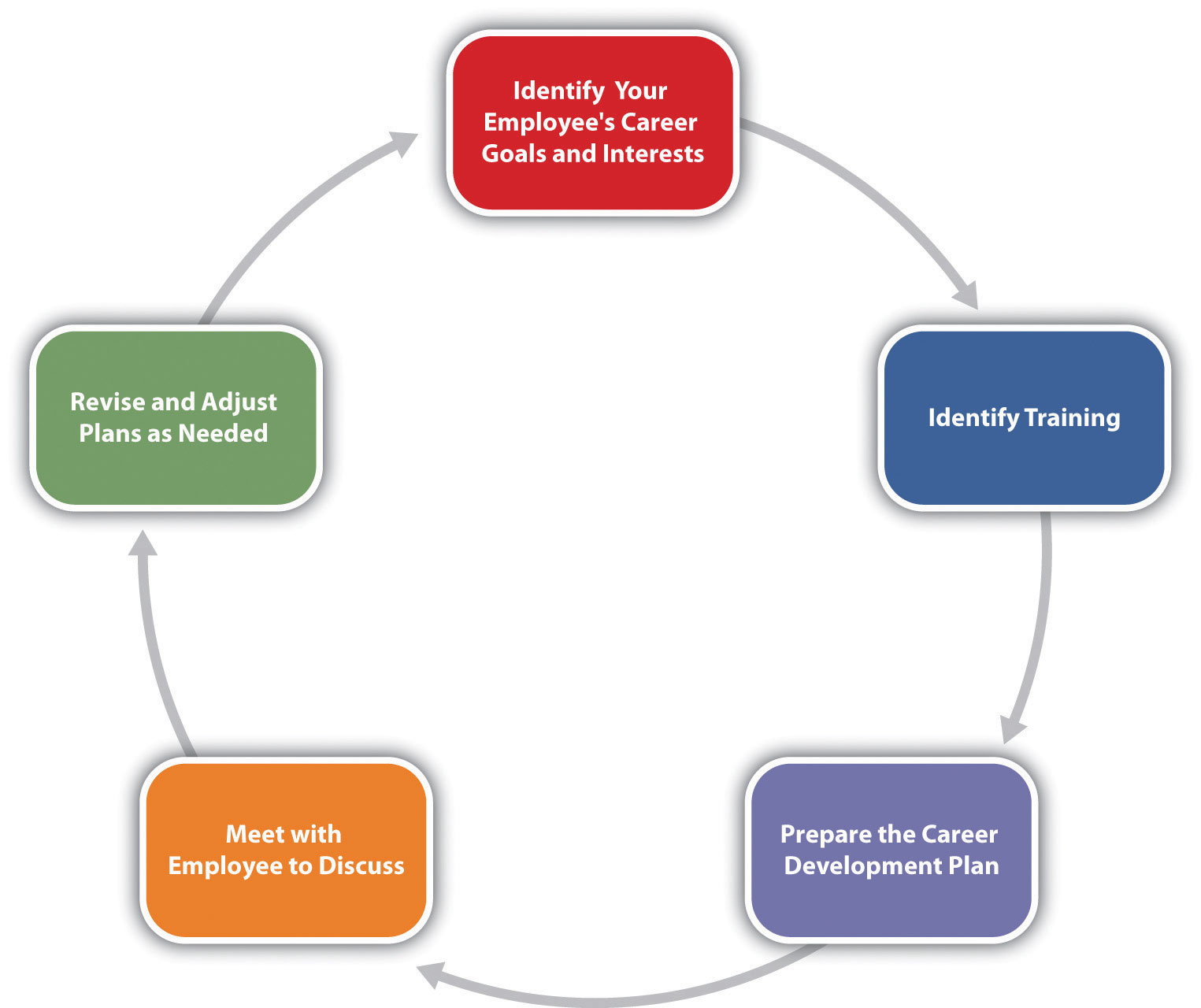
At this stage, the learning attains a kind of maturity and trainees feel humble to be learned people. This is a realization stage and most trainees are aware of the limits of their capabilities. Motivational dynamics. Training managers should also consider the learning styles of people. Such styles can be classified as – Dependent learners - prefer instructor led approach – Collaborative learners — prefer learning by group work practice – Independent learners — who want to learn on their own, whether facilitated or not by the trainer. Process of training design. Designing a training program involves a series of steps from identifying the learning objectives, determining the training content, deciding the methodologies, selecting the learning activities, defining evaluation criteria and to specifying follow-up activities.
Even though it is the standard sequence of activities, training managers may have some variations depending upon the situations. Process of training design. Identifying the training objective – Training objectives are of great significance from a number of stakeholder perspectives:. Trainer. Trainee. Evaluat or. Design er.
Process of training design. Determining training content – The major activities involved in the action plan are:.
Identifying the program contents and activities. Dividing program contents into sub-topics. Segregating the contents and activities into knowledge, skill, and attitude related.
Organizing the content sequentially. Process of training design. Selecting training methods – Training methods can be broadly classified into two groups. On the job approaches like job instruction training, job rotation, coaching, mentoring, etc.
Designing Training Program Ppt
Off the job approaches like classroom training, seminars, workshops, etc. Process of training design. Identifying learning activities and developing lesson plan – There are some basic rules for developing lesson plans:. There should be proper sequencing of learning. The training manger should prepare an instructor guide.
The training manager should ensure that the morning sessions are used for difficult topics, subject to proper sequencing. Process of training design.
Defining evaluation criteria – Training design is incomplete if it does not contain evaluation criteria – The objectives of the evaluation are to see how far the training program was effective enough in meeting the training objectives. Process of training design. Specifying follow-up activities – Following questions while specifying follow-up activities and has to find answers for them in advance:. Whom can the trainee ask if he requires any guidance while practicing at workplace?. What should the trainee do for his part to master the taught skills?. Can those trainees who fail to meet the predetermined standards of performance be retrained?